How Meko fits in your stack
Meko is the agent-native data infrastructure that enables multi-agent systems to learn together, building collective memory and shared knowledge that compounds across the entire system.
It supports:
- Collective memory. Learning compounds across the entire system, not just per-agent memory.
- Shared knowledge. Meko builds knowledge over time from conversations, real-time data sources, and slower-changing knowledge bases.
- Decision Traces. Connect raw conversations to execution traces of how LLMs think, agents process memory and knowledge, learn from it, and share that learning.
Meko is serverless, and multi-tenant (multi-agentic). It provides memory, conversation history, shareable knowledge, and full chain-of-thought traceability.
Architecture
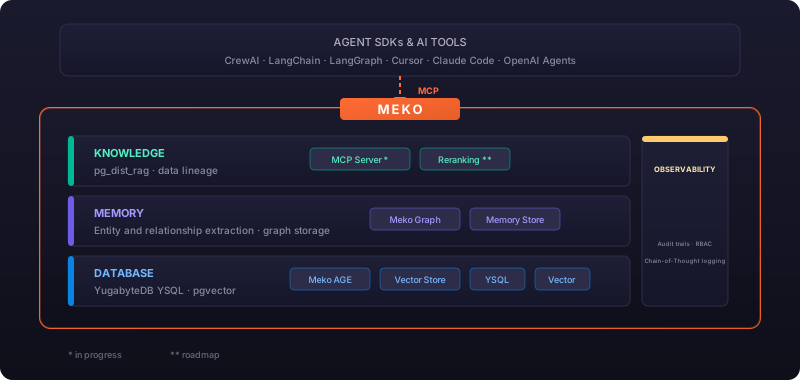
Meko integrates with any agentic framework through a standard MCP interface. It is built on top of a unified distributed PostgreSQL data layer that supports vector, SQL, NoSQL, graph, and search.
Meko sits between your agent SDK and the underlying storage, providing a unified data layer that replaces multiple standalone systems.
What you get
A datapack is the isolation unit for agent data in Meko. Datapacks can be shared by many users and connected to many agents. A datapack incorporates the following:
| Capability | Powered by (internal) | API |
|---|---|---|
| Conversation history | PostgreSQL (YugabyteDB YSQL) | conversation_* tools |
| Memory | Durable facts with hybrid semantic, keyword, and entity-aware retrieval | memory_* tools |
| Knowledge base | RAG pipeline (pg_dist_rag) + vector search | knowledgebase_* tools |
| Decision traces | LLM reasoning traces and execution logs | Observability dashboard |
| Observability, security, RBAC | Spans the full stack, not bolted on per-component | — |
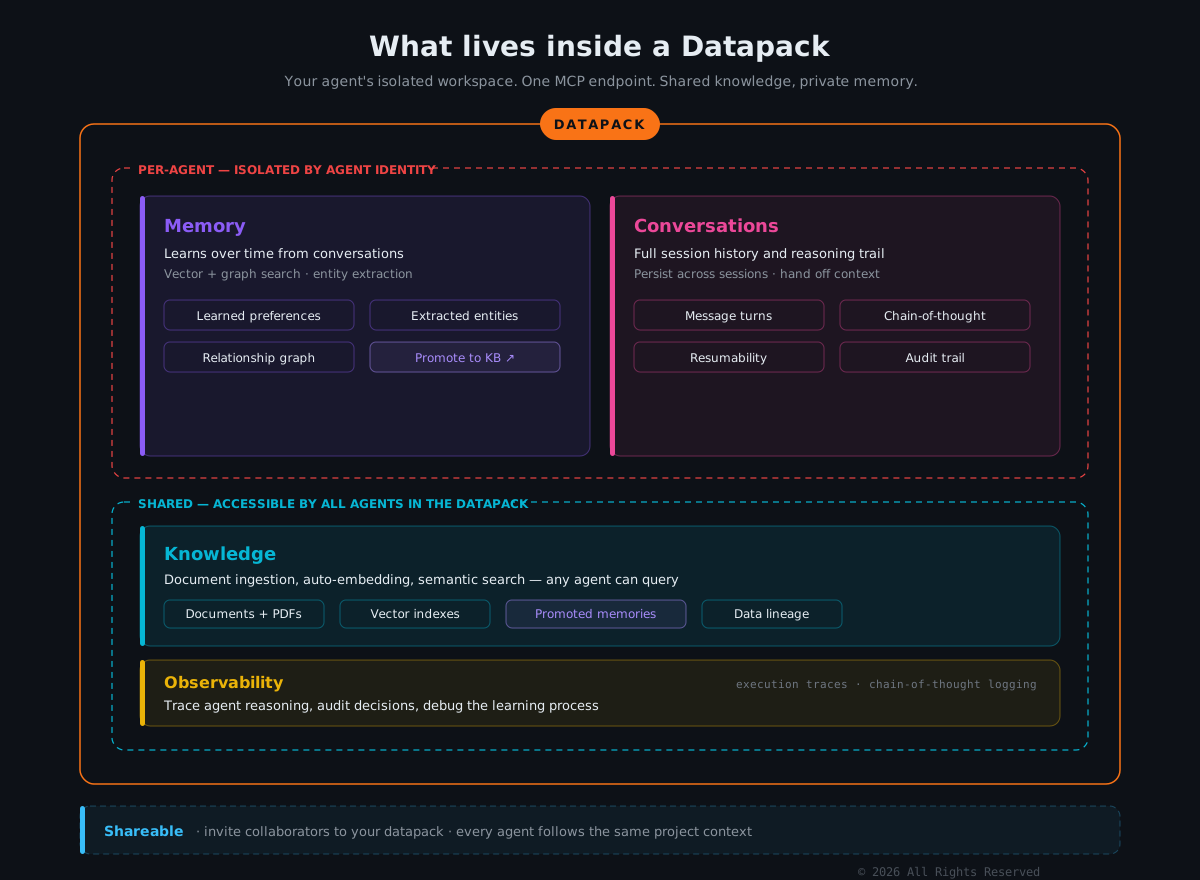
The underlying storage technologies are managed internally and not directly accessible.
What Meko replaces
Without Meko, building an agentic application typically requires wiring together:
- A relational database for structured data
- A vector database for embeddings and similarity search
- A search system for memory retrieval
- Per-database observability, security, and RBAC
- Custom integration code for stitching together search results from each database
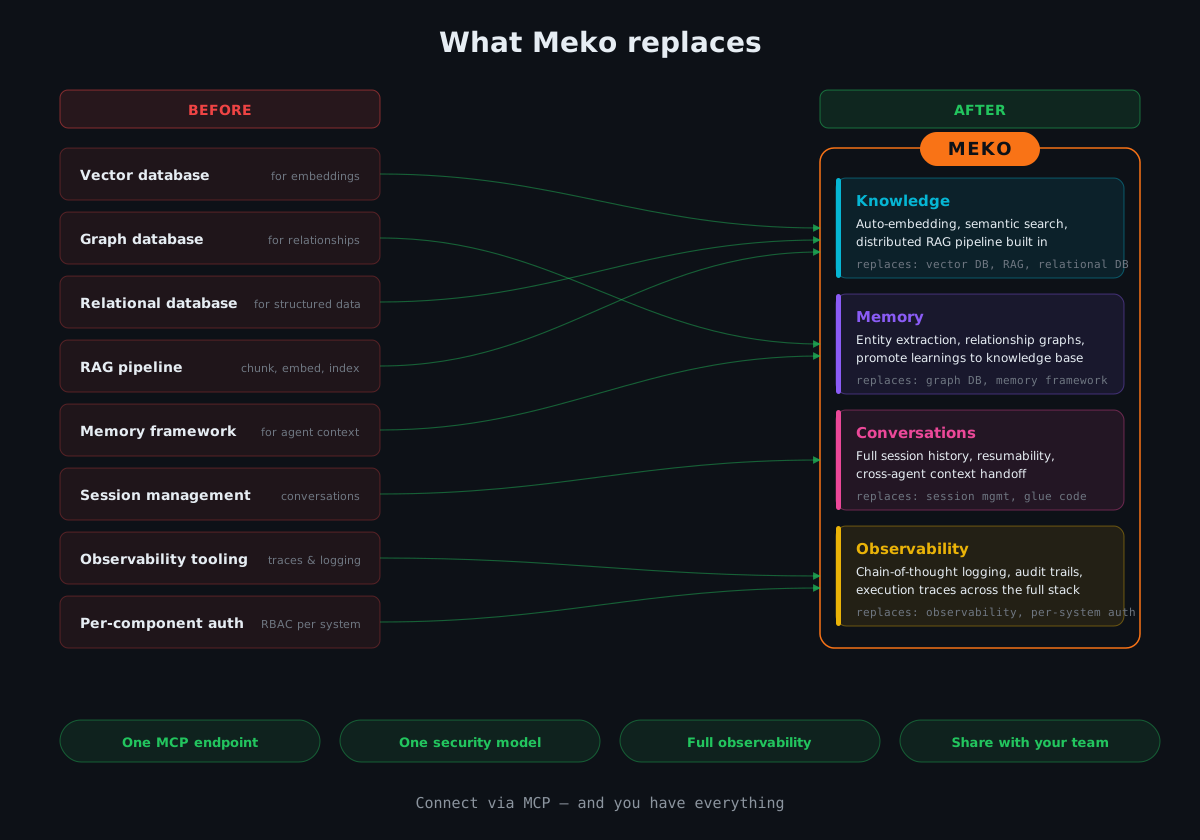
Meko replaces all of this with a single system. The memory, knowledge, and conversation layers share state and operate as one.
Framework compatibility
Meko works with any agentic framework, including:
- CrewAI
- LangChain / LangGraph
- OpenAI Agents SDK
- Any MCP-compatible client
Deployment
- Cloud: Currently, Meko is a cloud service, managed by YugabyteDB.